Search Sermons

Tuesday, July 10, 2012

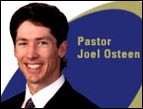
Joel Osteen: The Power of Positivity (part 2)


  CBN.comIt's not easy pastoring 30,000 people, but Joel Osteen does it with a smile on his face. In the second part to this special interview, Lisa Ryan caught up with the busy Texan to talk about his positive preaching style and Lakewood's new church home.
Joel Osteen (preaching): I want to challenge you today to get out of your comfort zone. You have so much incredible potential on the inside. God has put gifts and talents in you that you probably don’t know anything about.
Lisa Ryan (reporting): Joel Osteen is called “The Smiling Preacher” – and no one wonders why. His brand of preaching is upbeat, full of hope and victory. Does it work? The 30,000 people who attend Lakewood Church in Houston think so. As do the millions who tune in to catch Osteen on TV.
Osteen’s father, John, founded Lakewood in 1959. He pastored the church for 40 years until his sudden death in ’99. Joel never wanted to preach. Never went to seminary. He loved running Lakewood’s TV ministry – from behind the scenes. When his father died, Joel sensed an overwhelming call to the Lakewood pulpit.


Joel (preaching): There is a place that God has specifically designed for you where all your needs will be supplied, where you’ll be happy and fulfilled, and where you’ll be using your gifts and talents to the full.
Lisa (reporting): Osteen’s new book, Your Best Life Now, is on the New York Times Bestseller List and has sold nearly two million copies.
Lisa: You talk in your book about having a good self-image. Is it selfish to want to have a good self-image?
Joel: I don’t think so. We are made in the image of Almighty God. [Yet we] go around not feeling good about ourselves with that weak-worm-of-the-dust mentality. So many people even talk about themselves: “You know what? I’m unattractive, my mind’s so slow, and I can’t do this.” And you know what I tell them? “God didn’t make a mistake when He made you. You need to see yourself as God sees you.”
Lisa: You spend an entire section of the book talking about letting go of the past. Is anyone too broken or too wounded to be healed?
Joel: I don’t think so. In a big church like our’s, we deal with people that have lost their children or [went through] some kind of accident -- things like that. You gotta say, “I don’t know why that happened to me, but I’m going to trust You that You’re in control anyway.” That’s what I try to encourage people with. You can live your life angry, bitter, mad at somebody or even guilty, not letting go of your own mistakes, but you won’t receive the good things God has in store.
Lisa: You talk about the benefits of adversity. How does that work for our good?
Joel: The Bible talks about how God uses difficult situations to develop our character and get us stronger. The death of my father is probably the biggest thing that I ever faced. Daddy and I were best friends. I worked with him all the time, and I thought, “How am I ever going to make it with my father gone?” But out of that darkness, out of that disappointment in my life, that’s what God used to push me into another level of victory or another level of ministry that I never knew I had.
Lisa: You say in your book that happiness is a choice regardless of our circumstances.
Joel: I see so many people say, “Well, Joel, I just don’t have a good job, or my marriage is not where it’s supposed to be.” Really it’s excuse after excuse to not be happy. To me it’s a waste. I’m going to look at what’s right and not what’s wrong in my life. I’m alive, I’m healthy, and you know, a good thing to remember is somebody’s got it a lot worse than we do.
Lisa: Do you think God is more concerned with our happiness or our holiness?
Joel: I think He’s really more concerned with our holiness. I think we need to live a holy and a Godly life. But I think when you do that, I think it all works together. You may never get to that perfect world that you’re waiting for where everything’s going to be perfect and you got that much money and your house paid off.
Lisa: Like the Walgreen’s commercial.
Joel: I know, yeah. (laughs) And you’re waiting for it, then it never comes. What a disappointment to not enjoy every day while you’re in the process of God changing you.
Lisa (reporting): Eight thousand people in a service would be plenty for most folks. But when Lakewood moves into Houston’s Compaq Center – they’ll have room for a few more.
Lisa: Joel, how many seats can you fit in here?
Joel: There’s gonna be about 16,000.
Lisa: Oh my goodness, and you’ll have no problem filling that on a Sunday.
Joel: Well, I hope not, I really feel good about it.
Lisa: Well, you’re not only doing this here, but you’re taking Lakewood on the road to other venues like this around the country, aren’t you?
Joel: We are. We’re going to do 22 different nights this year, all across America. Finally we decided to lease the big ones and thought if no one shows up, we’ll turn the lights off on top, but God just does more than we could ask or think and the places have all been full, so we’re excited about it.
Lisa: Did you ever dream that Lakewood Church would be in a facility like this?
Joel: I never did. And I grew up here, coming here as a big Rockets basketball fan, I had seats over there, sec. 104, row 5, and I saw Akeem, Larry Bird, and all those guys play here... I don’t say it arrogantly, but I believe one day they’ll be 100,000 people coming between four to five different services, and not for our glory, but I just believe church can impact the whole city, can impact the culture, so we’re just gonna believe for big things.


Sunday, July 8, 2012

PRACTICES OF A POWERFUL CHURCH

Text: I Thessalonians 5:23-28

INTRODUCTION:
"Such and such church is a great church!" Have you ever heard someone say something like that?
1. What is a great church? Large or small does not necessarily determine whether a church is great or not.
2. Some people believe that a church must be large in order to be great. Others believe that a church must be small to be great. A great church can be small or large.
3. Every church that is in love with Jesus Christ and obedient to Him is a great or powerful church.
4. Every Christian who is right with God longs to be a part of a powerful church.
5. The four practices of a powerful church are:
(1) The members live godly lives,
(2) The members pray for their spiritual leaders,
(3) The members are friendly to one another,
(4) The members study their Bibles.


I. THE PEOPLE LIVE GODLY LIVES (I THESS. 5:23-24)
How often the testimony of a church has been compromised and destroyed because the members lived impure and ungodly lives. In order for a church to be powerful, them members must live godly lives. How do people live godly lives? The apostle Paul gives the answer to this question in these verses. Let us give heed to what he says and pray that God will perform these things in our lives. As we consider how people may live godly lives, let us note the possibility of godliness (5:23) and the power for godliness (5:24).
A. The Possibility of Godliness (5:23)
The good news is that it is possible for us to live godly lives and to honor the Lord and enhance the testimony of our church.
B. The Power For Godliness (5:24)
Godliness can be a reality because of the fact that God can perform it in our lives. He empowers us for godliness.
That God is "faithful" means that He can be trusted or relied upon concerning all that He has said.

II. THE PEOPLE PRAY FOR THEIR SPIRITUAL LEADERS
(I THESS. 5:25)
Praying members are essential to a powerful church. One particular area in which the members of a church are to pray is for their spiritual leaders, especially the pastor.
A. The Statement of His Request (5:25)
The affectionate address, "brethren," is placed first in the sentence for emphasis.
Paul requested that the praying for him be motivated by the ties of Christian brotherhood.
B. The Substance of His Request
In order to understand Paul’s request for the prayers of his Christian brethren, we will consider his request for prayer in some of the other epistles.
In Romans 15:30,31 he asked for the prayers of his readers: "Now I beseech you, brethren, for the Lord Jesus Christ’s sake, and for the love of the Spirit, that ye strive together with me in your prayers to God for me; That I may be delivered from them that do no believe in Judea; and that my service which I have for Jerusalem may be accepted of the saints."

III. THE PEOPLE ARE FRIENDLY TOWARD ONE ANOTHER
(I THESS. 5:26)
The formation of cliques can be the death of a congregation. God’s people need to be friendly and open to one another. This takes some effort, but it is effort that will be rewarded.
A. The Imperative of Friendliness
The word "salute" means "to greet, to bid welcome." It conveys the thought of extending friendly greeting to others.
The greeting was to be extended by means of a "holy kiss."
A kiss upon the cheek was a common form of oriental greeting among friends. Our handshake serves the same purpose.
"Holy" denotes that it is be an expression of Christian love toward fellow Christians.
B. The Inclusiveness of Friendliness
"All the brethren" gives the extent of the greeting. All the members of the congregation are to be greeted in a friendly and loving manner.
C. The Impact of Friendliness
Growing churches are known for their warmth of fellowship and genuine concern for people.
Note the commandment of Jesus: "This is my commandment, that ye love one another, as I have loved you" (Jn. 15:12).

IV. THE PEOPLE STUDY THEIR BIBLES (I THESS. 5:27)
No congregation can be what it should be apart from a diligent study of God’s Word. Each member must take it upon himself to learn as much of the Word of God as he can. The Word of God tells us how to live in a manner that is pleasing to God and profitable for us.
A. The Propriety of Bible Study
Paul put these Christians under a solemn duty to read his epistle to the entire congregation.
The word "charge" carries the idea of "to put under an oath." The seriousness of the charge to read the epistle may be seen in the use of the phrase "by the Lord." Paul charged them by the Lord or in the Lord’s name to read the epistle to the entire congregation.
Paul wanted his readers to understand the instructions of the Word of God.
They could not do so without reading and studying it.
B. The Priority of Bible Study
A growing church gives priority to the Word of God.

V. THE PEOPLE APPROPRIATE THE GRACE OF GOD FOR THEIR LIVES (I THESS. 5:28)
The grace of God is essential for salvation and the grace of God is essential for Christian living. Salvation comes by grace through faith (Eph. 2:8-9). The grace of God enables us to continue in the Christian life.
A. A Specific Grace. It is the "grace of our Lord Jesus Christ." That is, this grace has its origin in the Lord Jesus Christ.
B. A Sustaining Grace. The Lord gives grace for every trial to those who humble themselves before Him. James 4:6, "But he giveth more grace. Wherefore he saith, God resisteth the proud, but giveth grace to the humble."
C. A Sufficient Grace. The grace of the Lord is sufficient for any need that we may have. II Corinthians 12:9a, "And he said unto me, My grace is sufficient for thee: for my strength is made perfect in weakness."

The ABC of Sermons

In the process of wrestling with God over Mission, Vision and Direction, I "fell into" a new sermon outline that has proved to be extremely helpful to me. And I love its simplicity. It goes like this…
  1. Story-Opened
    • Open with a story that has enough weight to carry the entire sermon. It can be the context of Scripture you are preaching, but doesn’t have to be. But the story must be "heavy" enough to thread through the entire sermon.
  2. Head
    • This is what some are thinking  now. The wrong frame of thinking in their heads that is producing the wrong beliefs and wrong actions.
  3. Heart
    • This is that God says we should be thinking and believing. The real Truth that will bring transformation to those who receive it.
  4. Hand
    • This is what we should do with this new revelation of Truth
    • Many times I will break this up
    • A challenge to those Outside
    • A challenge to this Inside the Kingdom
  5. Story-Closed
    • I like to go back and tie a knot in the thread of the story that has been woven through out the sermon. And end it in a way that adds an urgency to the previous challenge.
I’ve been using this for several months now, and our other campus pastors and teachers have found it be very valuable to them. It really helps when studying, and delivering, it’s really easy to keep in your head, and helps to add content in the right places.
I pray it will be a tool that  you can use to impart real Truth and challenge to those you lead and pour into.

That Glorious Union

Introductory Message:
 
We will attempt, and may I place great emphasis on the word "attempt", to exposit this great Letter of the Apostle Paul to the Ephesian church.  An attempt is the highest achievement that any mortal man can achieve when it comes to understanding or explaining the uncovered mysteries that are contained in the book.
 Ephesians is a complete book, in that it contains all the mystery concerning Christ and His church.  This book is also a convenient book, in that the mystery of the church, as revealed to the Apostle Paul, becomes very clear to the serious saint who will exposit it correctly.  But most importantly, Ephesians is a Christ book, in that we see our Lord as our heavenly bridegroom.  In this attempted exposition, we will enable ourselves to receive a more heavenly and spiritual understanding, if we look at this great masterpiece of scripture as:
 
1)  A Unrivaled Symphony
The aim of a symphony concert is, by musical standards, a progression of sound and intensity, until a pinnacle is reach near or at the end.  These progressions are called octaves.  Each musical octave contains eight notes and each note of the octave is sounded in a higher pitched note, with the eighth note being the highest.  As this progression of sound travels from octave to octave, each octave achieves a higher composition, and the ultimate goal is to reach what is called a crescendo, which is the culmination and combination of all the octaves at the end with an enormous increase and intensity of sound.  Now, in comparison, Ephesians is a heavenly symphony and our conductor is Jesus Christ himself.  There are sweet notes of salvation, sound notes of seperation, and safe notes of security. However, there is one striking difference in an orchestrated symphony and this heavenly symphony.  That difference is, that instead of building throughout the musical presentation to an ultimate end, Ephesians begins with a crescendo of out bursted sound and never comes back down the scale.  In essence, it begins with a crescendo and ends with a crescendo.  There are no dead notes, no flat notes and no skipped notes.  This book is a masterpiece from the Master Composer.  Only a perfect God could compose and conduct a perfect symphony.
 
2)  An Unveiled Shadow
In the canon of scripture, there are many shadows and types of Christ.  The Old Testament contains many pre-incarnate appearances of the Lord Jesus Christ.  Through these types, we see glimpses of the shadow of our Bridegroom.  Now a shadow is only a representation and a promise that there is a substance that is producing the shadow.  For instance, the shadow of a dog cannot bite, but the substance of the dog can tear you up.  This book of Ephesians has seized the shadow, and traces the shadow back to the real substance.  In this book, we are looking at shadows of the Bridegroom any longer, we are beholding the substance.  This letter unfolds and unveils the mystery that the shadow produced and presents the promise and provision that only the substance can provide. While the shadow only contains a promise that there is a real substance, Ephesians reveals the substance, which not only fulfills the promise, but also contains the presence.
 
3)  An Unfolded Suitcase


 Many times, when I was preparing for a trip, I would wisely pack all the necessary items that would be needed upon arrival at my destination.  Contrary to the fact that sometimes I would forget to pack some necessary item, and suddenly and sadly discover this fact, Ephesians is a well planned, packed and performing of every essential item This book is a suitcase that has been packed with loving forethought and when opened and examined, contains all the faith, facts and fashion that we will need, not only for the journey, but also for the jubilee that we will be attending. In this wonderful and heavenly packed suitcase, there are no unwanted or unneeded items.  The essentials that we need in order to be washed clean, and all the clothing that we will desire to wear.  Another wonderful observation is that the items in this suitcase are not just thrown in randomly, but are neatly and timely placed and packed in the order that we will need them in order to function by faith. As we are brought together to sit in heavenly places in Christ Jesus, through the exposition of the wonderful book, let us look on with excitement and expectation at the Unrivaled Symphony, the Unveiled Shadow, and the Unfolding Suitcase.

Tuesday, May 8, 2012

FOUR LESSONS GOD TEACHES US AS HE PREPARES OUR HEARTS FOR GREATNESS

1. HE is worthy of praise.

In loss and suffering, we realize the greatness of God. That is, our own powerlessness reminds us of His awesome power.

2. HE is to be trusted.

Through loss, God keeps His promises. He continues and finishes the work He begins in us.

3. HE is to be feared.

David learned, during this very difficult period of his life, to fear God. And the more we fear God, the less we fear everything and everyone else.

4. We are to walk before HIM.

Just the right place to find a schadenfreude

Wednesday, December 14, 2011

How choose christmas gifts for people you do not like


Though you may hate someone with a burning passion, you may find yourself being forced to get them a gift. Such as your in-laws or people at work. But, it's Christmas time so just be nice and You need to release forgiveness to them. Tips to do it...

1. Obviously, you're going to want to not overspend so get them something that doesn't include a lot of thought and time but doesn't leave them thinking how crappy your gift is. So make sure you set a budget.
·Get them something that is generic, where it's not personal so you would be able to give it to just about anybody and it would work.
2. Don't wrap it with yesterday's newspaper though. Yes, we know you hate them, but it's Christmas so find some nice, simple, inexpensive CHRISTMAS wrapping paper. Not Easter or Happy Birthday.
3. When giving the gift, be polite and simply hand it to them, don't make faces or act like doing this is a big chore. Remember: stay classy.
4. and lastly, if this is a grab bag type of thing at the office, you're off the hook with handing it to them!

Tuesday, November 22, 2011

America's Future

America’s Future

Charles F. Stanley
Scripture: Galatians 6:7-9
I. Introduction: Is it possible to predict a nation's future? Can we anticipate trends, such as blessing and liberty or poverty and oppression? I believe that a simple yet powerful biblical principle indicates where our nation is headed: You will reap what you sow, more than you sow, and later than you sow. This principle has tremendous implications for America's future. Given the seeds of wickedness that many in our nation are sowing, we are heading toward disaster. It's not too late to change course, but Christians must act now to preserve our precious liberties.
II. The Principle Explained
A. Whatever you and I sow today, we will reap more of later. Galatians 6:7-8 says, "Do not be deceived, God is not mocked; for whatever a man sows, this he will also reap. For the one who sows to his own flesh will from the flesh reap corruption, but the one who sows to the Spirit will from the Spirit reap eternal life."
B. "Sowing to the flesh" refers to indulging the "self"—surrendering to our tendency to sin
(Gal. 5:19-21). Those who practice a life of sin will eventually experience corruption, suffering, and death.
C. "Sowing to the Spirit" means we surrender to the Holy Spirit and allow Christ to live His life through us (Gal. 5:22-23). If we sow to the Spirit, you and I will have supernatural peace in the midst of difficulty and earn eternal rewards.
D. A person who sows wickedness will not escape the harvest of his or her actions. Galatians 6:7 cautions us to avoid lying to ourselves that we will be the exception to the rule. If America really believed what the Bible says about consequences, our nation would not be heading in its current direction.
III. The Principle Applied
A. The United States was founded on the principles of Scripture. For generations, no one questioned praying or teaching the Bible in school. Court cases and sessions of Congress opened with prayer. During that time period, we sowed faith in God and reaped the blessings.
B. About 50 years ago, things started changing in our nation.
1. Prayer and Bible reading were banned from public education.
2. Anything that mentioned God was removed from government buildings. Example: the Ten Commandments
3. Crosses and other symbols of our faith came under attack, mostly through the court system.
4. We legalized killing unborn babies and have murdered 50 million so far.
5. Same-sex unions are recognized as marriages in some states, although God's Word forbids homosexual acts (Lev. 20:13).
6. More and more, the name of Jesus is a forbidden word. Scripture says the Father gave Him "the name that is above every name" (Phil. 2:9). Can God continue to bless this nation if we refuse to honor the One who gave His life so we might truly live?
C. Essentially, as a nation we have said, "We don't need You, God." In the fifth chapter of Isaiah, verses 20 and 24 warn, "Woe to those who call evil good, and good evil . . . Therefore, as a tongue of fire consumes stubble and dry grass collapses into the flame, so their root will become like rot and their blossom blow away as dust; for they have rejected the law of the LORD of hosts and despised the word of the Holy One of Israel." Man can pass laws legalizing ungodly behavior, but God's principles don't change.
D. What are our scriptural responsibilities?
1. We need to stand up and live out the godly life we profess. If more pastors and other leaders had consistently preached biblical truth, we would not be in the situation America faces today. As believers, we need to faithfully live out our convictions.
2. Speak up. Don't be ashamed of the name of our Savior. One day, "every knee will bow . . . and every tongue confess that Jesus Christ is Lord" (Phil. 2:10-11).
3. Cry out to God to change the direction of our nation. He promises that He will respond to that prayer (2 Chron. 7:14). The spiritual core of our nation needs to change, and that change must begin in the house of God.
IV. Conclusion: We reap what we sow, more than we sow, and later than we sow. This fundamental biblical principle is true both in our personal lives and on a national level. We will reap the consequences for our disobedience. Make sure your life is contributing to the spiritual health of this nation, not detracting from it. If you and I want to live in a free country, we must be willing to take responsibility for maintaining our liberty.

A Financial Plan

A Financial Plan
Malachi 3:3, 6-15
Dr. Charles Stanley
I. Introduction—During these difficult economic times, many people are thinking about their finances. The national debt, high gas prices, and a struggling housing market are causing people to re-evaluate their financial plans. But do their plans match those of the Lord (Mal. 3: 7-15)? God’s plans are the very best, and in His Word, He has given us the wisdom we need to avoid the bondage of debt and attain His blessings.
II. God’s financial plan of promise requires active participation from us. It requires us to step out in faith and actively participate by tithing.
  • What is tithing?
    1. A tithe is ten percent of what we produce or earn.
    2. In the simplest terms, it is a penny of every dime you have. The same policy is as true for a dollar or for a million dollars. God provides all that you enjoy, so you must be willing to give a portion of it back to honor Him for all He has blessed you with.
  • The command is clear.
    1. It should come from our first fruits, not our leftovers (Prov. 3:9-10).
    2. We are to bring it to the storehouse—the church—to accomplish the work God would have us to do (Mal. 3:10; 1 Cor. 16:2).
  • The purpose is clear. The Lord asks us to give to benefit both our own financial health and the community. Tithing allows for three important things:
    1. To provide for the work of God. Our tithes provide for the ministry of the church in its day-to-day operations and to assist those in need both physically and with the Gospel (Acts 2:44-47).
    2. To prove the faithfulness of God. When you and I tithe, the Lord promises to bless us for our faithfulness. He tells us “Test Me now in this. . . I will. . . pour out for you a blessing until it overflows” (Mal. 3:10).
    3. To properly honor God. Tithing allows us to express reverence for the Lord, the source of all good things in our lives (James 1:17). We honor Him when we acknowledge His blessings in our lives, and He blesses that. Remember, our Father will never let us be in need when we are obedient.
III. God is saying two things . . .
  • Obey Me. Obeying God in all areas of your life, including your finances, is wise. Blessings will always follow when we are in the will of God.
  • Trust Me. God doesn’t tell us, “I might pour out blessings if you obey.” He tells us, “I will give you more than you feel like you can receive.” In fact, Jesus said, “Give and it will be given to you: good measure, pressed down, shaken together, and running over” (Luke 6:38). We simply cannot outgive God!
IV. Consider the promises. Those who have claimed the Lord’s promise have not been disappointed. He has transformed their lives. When you tithe, God promises:
  • “I will . . . open you the windows of heaven” (Mal. 3:10). In other words, you will experience the Lord’s provision firsthand.
  • “I will . . . pour out for you a blessing until it overflows” (v. 10). As you honor God, He increases the blessings in your life in wonderful ways you could never imagine.
  • “I will rebuke the devourer” (v. 11). The Father will protect you, your family, your job, and all your possessions.
  • “All the nations will call you blessed” (v. 12). The Lord will give you a powerful testimony among your friends and loved ones. Many will come to know Him through your obedience. Also, your children and grandchildren will learn from your example.
V. Consider the penalties. Refusing to tithe is the same as robbing God, and discipline is sure to follow (Mal 3:8).
  • Because of your rebellion, unbelief, and ingratitude . . .
    1. You miss out on God’s awesome provision and blessing.
    2. You experience the effects of disobedience in every area of your life.
    3. You are outside the Father’s umbrella of protection.
    4. You damage your testimony because of your unbelief.
VI. Conclusion—Do you believe the Word of God? Do you have faith that the Father will save you and provide for all your needs? Then trust Him with your tithe and watch as He provides for you. Surely, He will fulfill His promise to bless your obedience.

A Call To Godly Living - Charles F. Stanley

A Call to Godly Living


Scripture: Romans 12:1-2
  1. Introduction: God desires that every believer lead a righteous life. But our culture places a tremendous amount of pressure on Christians to "fit in." The doctrines of our faith are often mocked and ridiculed in the public arena. Individual believers sometimes make spiritual or moral compromises in an attempt to be accepted. How can we resist the secular influence of our time? In Romans 12:1-2, the apostle Paul reveals how to pursue holiness and resist compromise.
  2. God calls us to godly living.


    1. God's call to surrender our lives to Him as living sacrifices is reasonable because He redeemed us from spiritual darkness and adopted us as children.

      • In Romans 1-11, Paul explains salvation, victorious Christian living, and the Lord's ultimate plan for Israel. In Romans 12:1-2, he urges believers to give control of their lives to God in light of all He has done for us.
    2. We must make the choice to give control to the Father.
      • As God's people, we no longer have the right to run our own lives, but He still allows us to choose whether or not to surrender. Your entire being—including your mind, will, and emotions—should be yielded to God.
    3. We are called to be living sacrifices.
      • Becoming a "living sacrifice" means we allow the Holy Spirit to live through us. As we surrender to the Spirit's guidance and leadership, He empowers us to live a godly life.
    4. The apostle also urges believers to be holy sacrifices.

      • In Greek, this word means "set apart" (as in "for a special purpose"). In one of the paradoxes of our faith, sanctification—or being made holy—happens immediately at salvation, but it is also a lifelong process.
    5. Our lives should be acceptable to God.
      • As believers, we ought to be different from the world. Our goal should be to act as Jesus did: forgiving, loving, and helping others—yet knowing when to speak the truth in love or share our faith. When we sin, we should be quick to confess and repent.

        A godly lifestyle will attract some people to you, and it will drive others away. But sometimes the same people who resist the gospel will seek out a believer for help when life gets difficult.
  3. Those who live in a godly manner will face conflict with the world.

    1. Pressure from those in the world sometimes causes believers to compromise their convictions.

      • As individuals, Christians sometimes justify compromising the truth in this way: they claim they are "being a witness" by spending time with ungodly friends, even when that includes making unrighteous choices. Instead, we should make sure our best friends are believers who take their faith seriously
        (2 Cor. 6:14-15, 17; 1 Cor. 15:33). Our highest priority should be to please God rather than to fit in with the world.
    2. Paul warns believers, "Do not be conformed to this
      world"
      (Rom. 12:2).

      • The media frequently portrays the idea that if we become rich, attractive, influential, or famous, we will be happy and content. But none of things guarantee joy. Don't let our culture shape your value system and determine your priorities.
    3. To resist conforming to the world's image, you must "be transformed by the renewing of your mind" (Rom. 12:2). But how?
      • Fill your mind with Scripture. It is through the Bible that we learn God's perspective.
      • Focus on positive, righteous, and holy things (Col. 3:3; Phil. 4:8). This should include choosing friends and entertainment wisely.
      • Apply biblical truth to your heart. As you go about your day, ask God to show you how to put into practice the principles of His Word.
      • Practice the presence of the Lord. God is always with you. Ask Him to make you more sensitive to His presence. As you allow the Holy Spirit to live through you, He will help you withstand temptation and become more Christlike.
  4. Conclusion: The key to living a godly life is full surrender. That means we must let God have complete control over our lives. The Lord is looking for faithful men and women who will stand up for truth in a world that is increasingly opposed to the gospel. Rather than base your standards on popular opinion, allow Scripture to set your values. Answer the Lord's call to a godly life, and you will never be the same.

Saturday, October 15, 2011

Jesus Heals the Woman with Blood Issue

What can we know about this woman from these passages?

  • She was suffering from menstruating bleeding issue for 12 years.
  • She had spent all she had to get cured. (Luke 8: 43 (KJV) – “And a woman having an issue of blood twelve years, which had spent all her living upon physicians, neither could be healed of any.”)
  • She did not give up in spite of suffering from 12 years. In Jesus, she saw hope of being healed.
  • She was instantly healed. She felt and knew that she was healed.
  • She made a public confession of her healing and faith in Jesus Christ.

Why did she not go directly to Jesus for healing?

  • According to the Jewish law, man who touches a menstruating woman becomes ceremonially unclean. (Levi 15: 19-28) In that regard, she would have been ‘untouchable’ for 12 years.
  • She might have feared that Jesus would avoid healing her.
  • She did not doubt that Jesus had a power to heal her.
  • The nature of her disease may also be the reason. In an eastern culture, women issues are never spoken of in public.
  • Perhaps, past failures were in her mind. So, she decided to take more secretive way. If she did not get healed, no one would have known that she even tried.
  • She thought to herself, “If I only touch his cloak, I will be healed.”

Did Jesus know who touched him?

  • It is unclear whether Jesus knew who touched him or not.  There are two opinions about it.
  • First one says that Jesus knew who touched him. But he wanted her to come forward and profess her faith and healing. Jesus being God must know who touched him.
  • The second opinion is that he really did not know who touched him. From his conversation with Peter, it seems likely that he knew that power had gone out from him, but not sure how. I believe that Jesus was not pretending there, He really did not know, and that does not affect him being God. There were other things, he did not know. (Mark 13:32 Jesus’ second coming).

Lost in the Crowd:

  • Even when she was healed, she did not come forward immediately. She thought that she could go unnoticed, get lost in the crowd.
  • But Jesus noticed, he felt that the power had gone out of him. And he was persistent to know who that person was.
  • We all have a tendency to act in a way that we can go unnoticed; we can slip in the crowd. We do not want to profess it publicly. Often we hear that our faith is personal. Yes, it is a personal decision, but we also need to acknowledge it to others.
  • In case of this woman, she came trembling at Jesus’ feet, but then she went on to tell everyone, ‘why’ she touched him and how she was instantly healed. (Notice that Jesus only asked ‘who’ touched him and not ‘why’!)

What was so significant about her action? What makes her faith so special?

  • Unshakable: She had a single focus that if she touches his cloak, she will be healed. She did not let the circumstances or doubts shake her faith.
  • Unbelievable: Her faith was truly unbelievable. She believed what was not there. But that is the very definition of faith. (Hebrew 11:1)
  • Unreasonable: In some ways, it was unreasonable. One cannot reason it in itself. Only in the light of the object of faith, it makes sense.
  • Faith at its core is a simple trust and belief in a person. It is a childlike faith that moves the mountain.
  • Jesus wanted to instill this kind of faith in his disciples (who often failed to exercise such faith). He often rebuked them for being “of little faith”.
  • Even after receiving the healing, she showed extraordinary courage to come forward and share everything in presence of all people.
  • Jesus praised her for her amazing faith and blessed her; it was a powerful testimony of God’s power and faith of a person at work.
  • Testimony of healing can have powerful impact on people, especially those who do not know Jesus.
  • “One miracle is equivalent to one thousand sermons.” – Angus Buchan (Faith like Potatoes).

Life Applications and Reflections:

  • Jesus knows us; he knows our personal struggles, weakness, sickness. We can hide it from others, but He notices us and seeks out for us.
  • We need to respond to him, we must be willing to acknowledge Him in the presence of others. We must be willing to share with others.
  • The extraordinary faith is a simple, unwavering, childlike faith in Him.
  • Without faith, it is impossible to please God.
  • Are you willing to put your trust in Him? You may be going through any physical, emotional, spiritual pain or sickness; He can heal you if you just believe in Him.
  • “Where is your faith?”

A Heart for God - Charles F. Stanley

A Heart for God
Charles F. Stanley
Scripture: Acts 13:16-23
I. Introduction: How would you like to be remembered? Saints such as Abraham, Moses, David, Peter, and Paul have inspired believers throughout the ages. Each of them, although imperfect, is an amazing example of what the Lord can do through hearts that are truly committed to Him. Do you want to be like them—a person who honors God wholeheartedly?
II. We have an excellent example to follow.
The Bible says that King David followed God with all his heart (Acts 13:22-23). At the core of everything he did was a desire to exalt the Lord. The Father wants our paths to be governed by His plans, our interests to be defined by His purposes, and our love to motivate us to obey Him without reservation. When we pursue God’s heart, we find life at its best and a legacy worth leaving to those who come after us.
III. How can we know if we are following God with all our heart?

A. The priority of our life is our personal relationship with the Lord.
A person after God’s heart makes his or her relationship with Him a top priority.David had an overwhelming love and respect for Scripture because it taught him how to draw closer to the Father (Ps. 119:15-16, 105). He often sought God in prayer for strength, wisdom, and the Father’s wonderful presence (Ps. 5:3, 63:6-8).
B. We place our trust in the Lord when facing trials and difficulties.
David trusted in God no matter what hardship he faced. While the rest of Israel’s warriors cowered before Goliath’s terrifying nine-foot frame, David was outraged by how the Philistine dishonored God’s name (1 Sam. 17:45-46). Throughout his life, he endured extraordinary challenges with great confidence that the Lord would help him. Because of David’s faith and leadership, Israel prospered in a manner unsurpassed to this day.

C. We have a strong, passionate desire to obey God.
As a man after God’s heart, David delighted in accomplishing the Lord’s will. His obedience wasn’t motivated by the fear of sin’s consequences. Rather, it was David’s trust and love for God that led him to submit wholly to the Lord. On two occasions, David had the opportunity to kill Saul and take the throne of Israel. Yet he preferred to be obedient to God than to be the king (1 Sam. 24:6).
D. We demonstrate a spirit of humility.
This future king also shows us that a person with a heart for God is humble. David had many reasons to be proud—he was a handsome man, a skilled musician, the Lord’s anointed ruler, a triumphant warrior, and a national hero. Yet in 2 Samuel 7:18, David said, “Who am I, O Lord God, and what is my house, that You have brought me this far?”
E. We demonstrate the spirit of a servant.
When he was young, David accepted his father’s authority and obediently tended sheep. As a worker in Saul’s household, David offered his very best to the king, including his musical talents and skills as a military leader. Finally, David served the people of Israel wholeheartedly as their king. In each instance, he was a dedicated, faithful servant of God.
IV. Conclusion: Do you desire to mirror God’s heart and to influence those around you for good? You would be wise to follow David’s example. Make your relationship with the Lord a top priority, and trust and obey Him in everything. When you succeed, remember that all you are and have is a gift from God. Then you will show the world that your heart belongs exclusively to Him.

Tuesday, September 27, 2011

EVERY THINGS BETTER WHEN GOD'S ON IT

I. It Is A Better Way Of Life
A.
Those who give themselves
wholly to the Lord,
B.  Realizing the truth of I Cor. 6:19
What? know ye not that your body is the temple of the Holy Ghost which is inyou, which ye have of God, and ye are not your own?
(1)
Have a life that is far superior  to a LOST person.
(a)
The best way to live is to live for theLord
(b)
It would be terrible to get to the endof the   LIFE and realize you hadwasted your life:1. Serving sin or self.(2) Christian life is better (a)  It is a life of peace,(b) Life of promises(c)  Life of power.(d)  Who in their right mind would want toforsake the life we have in Jesus?

 
II. It Is A Better Quality Of Life.
A) The Bible says much about the life that we have inand through the Lord Jesus Christ.a) First, it is eternal life.Our physical lives one daywill end,
i)
But the salvation of God is eternal (Jn. 3:16)
For God so loved the world, that he gave his only begotten Son, thatwhosoever believeth in him should not perish, but have everlasting life.
b)
Secondly, it is abundant life (Jn. 10:10).
The thief cometh not, but for to steal, and to kill, and to destroy: I amcome that they might have life, and that they might have it moreabundantly.
B)
The word "abundant" means an "overflowing" lifewhere there should never be any spiritualshortages.
C)
Thirdly, it is a gratifying life (Phil. 4:13).
I can do all things through Christ, which strengtheneth me.
 a) Since we have life from Godi) You can be sure nothing can surpass or excel it in any way.
 
III. It Is A Better View Of Life.

A)
The Bible speaks of a "better hope" that we havein the Lord (Heb. 7:19).
For the law made nothing perfect, but the bringing in of a better hope did;by the which we draw nigh unto God.
B)  It is a sure, confident expectation of better thingsfor the future.
a)
Hope is associated with the second coming 
of the Lord Jesus Christ (Titus 2:13).
Looking for that blessed hope, and the glorious appearing of thegreat God and our Savior Jesus Christ;
b)
Like an "anchor" in life to settle and stabilize
us (Heb. 6:19). Which hope we have as an anchor of the soul, both sure andsteadfast, and which entereth into that within the veil;

IV. It Brings Better Companions In Life.
 A) When you are saved
a)
You become more conscious and careful aboutyour company (Psalm 119:63).
I am a companion of all them that fear thee, and of them that keepthy precepts.
b)
It is the desire of the righteous to seek thecompany of those that have the same spirit of the Lord.
 
CLOSE
A) EVERY THING IS BETTER WHEN GODS ON ITa) OUR WAY OF LIFE IS BETTERb) OUR QUALTIY OF LIFEi) IS ETERNALii) IS ABUNDANTOVERFLOWINGiii) IS GRATIFINGNOTHING IS OUT OFREACH THRU CHRISTc) OUR VEIW OF LIFE IS BETTERi) THERE’S HOPEii) THE LORD IS COMING BACKiii) WE ARE ANCHOR IN WHAT Jesus DIDd) OUR COMPANIONS WILL LOVE THE LORDi) STRIVE TO HAVE CHRISTAIN FRIENDS

Tuesday, September 20, 2011

RESPONDING TO MATERIALISM

INTRODUCTION

1. We live in a very materialistic society...
   a. As evidenced in our popular culture (music, TV, etc.)
   b. As expressed in the desire for an affluent lifestyle

2. Materialism is dangerous foe to the Christian...
   a. The deceitfulness of riches can render the Christian fruitless
      - Mt 13:22
   b. The desire for riches can ensnare the Christian, leading him
      astray - 1Ti 6:9-10

3. What can we do as Christians, and as the church?  Consider God's use
   of Isaiah...
   a. Sent to a corrupt and materialistic society - Isa 1:21-23
   b. Offering that which truly satisfies - Isa 55:1-3

[Today, Jesus has a similar response, which we can offer to a world that
is starving for what truly satisfies...]

I. JESUS' RESPONSE TO MATERIALISM

   A. EXPOSES THE DEFICIENCY OF RICHES...
      1. Many think of "the good life" in terms of material prosperity
      2. Jesus taught there is more to life than material possessions
         a. Man's life does not consist in the abundance of possessions
            - Lk 12:15
         b. As illustrated in the parable of the rich fool - Lk 12:16-21
      3. Jesus taught the insecurity of riches - Mt 6:19-20
         a. They are susceptible to corruption
         b. They are open to theft
      4. Jesus taught the danger of riches - Mt 6:21-24
         a. They can dominate our affections
         b. They can blind us to the true light
         c. They can prevent us from being able to serve God
      -- Thus the message of Jesus is one of correcting our
         misconceptions; riches do not make one happy!

   B. EXTENDS THE TRULY ABUNDANT LIFE...
      1. Jesus offers a life filled with peace - cf. Jn 14:27
         a. Peace with God through justification - Ro 5:1-2
         b. Peace with man through reconciliation - Ep 2:14-16
         c. Peace with self through supplication - Php 4:6-7
         -- The peace Jesus offers "surpasses all understanding" - Ph
            4:7
      2. Jesus offers a life filled with love - cf. Jn 15:9
         a. Love patterned after the Father's love for the Son - Jn 15:9
         b. Love that can be fervent, yet pure between brethren - 1 Pe
            1:22
         c. Love that can be extended even toward enemies - Mt 5:43-45
         -- The love Jesus offers "passes knowledge" - Ep 3:9
      3. Jesus offers a life filled with joy - cf. Jn 15:11
         a. His commandments, His promises, all are designed to impart
            joy - Jn 15:11
         b. A joy that can abound in any circumstance - e.g., Php 2:
            17-18; 4:4; 1Pe 1:6
         -- The joy Jesus offers is "inexpressible" - 1Pe 1:8
      -- By offering such peace, love, and joy, perhaps we can
         appreciate why Jesus said He offers an "abundant" life - cf. Jn
         10:10

[To communicate this response to a materialistic society, Jesus calls
upon His church.  While it certainly entails proclaiming the gospel, let
me suggest some additional thoughts about...]

II. OUR RESPONSE TO MATERIALISM

   A. EXEMPLIFY JESUS' RESPONSE AS INDIVIDUALS...
      1. As individuals we must possess the peace, love, and joy Jesus
         offers
         a. Which comes through heeding His words - Jn 15:10-11
         b. Which comes through spending time in prayer - Php 4:6-7
         -- If we fail to spend the time necessary in such activities,
            how convincing can we be that we have a more "abundant" life
            to offer?
      2. As individuals we must not depend on material things for true
         happiness
         a. If poor, learn the secret of contentment - cf. 1Ti 6:6-8;
            Php 4:11-13
         b. If rich, trust not in riches but be quick to help those in
            need - cf. 1Ti 6:17-19
         -- Being content and willing to share goes a long way toward
            demonstrating that Jesus' response to materialism really
            means something!

   B. EXEMPLIFY JESUS' RESPONSE AS A CONGREGATION...
      1. The value of a congregational demonstration cannot be taken
         lightly
         a. Jesus stressed the value of brotherly love and unity - Jn
            13: 35; 17:20-21
         b. His church illustrated the value of congregational love and
            joy - cf. Ac 2:46-47; 6:7 (in light of 6:1-6)
      2. We should make sure that our fellowship and worship
         demonstrates...
         a. The love we have found in Christ (e.g., by the way we greet
            one another)
         b. The joy of being Christians (e.g., by the way we praise God)
         c. The peace Jesus made possible (e.g., by the way we work
            together)
      3. We should be careful as a congregation not to fall into a
         materialistic trap
         a. By placing too much concern over such things as:
            1) The physical facilities in which we meet
            2) The physical appearances of the members or visitors
         b. Not that is wrong to have comfortable facilities or to look
            nice
            1) But that should not be our primary concern
            2) But not to the neglect of truly important matters (like
               saving souls)!
         c. Otherwise we could be guilty of being like the Laodiceans
            - Re 3:17
            1) Who thought they were "rich, wealthy, and have need of
               nothing"
            2) Who were unaware they were "wretched, miserable, poor,
               blind, and naked"

CONCLUSION

1. The rampant materialism in our society provides us with an
   opportunity...
   a. For materialism leaves one in a state of spiritual malnutrition
   b. Therefore often ripe for the true feast Jesus has to offer

2. What does Jesus offer...?
   a. Rest for a weary soul - Mt 11:28-30
   b. Rivers of living water for a thirsty soul - Jn 7:37-39
   -- Which He provides through His cleansing blood and life-quickening
      Spirit - Ac 2:38-39

3. But if those trapped in materialism are going to believe such is
   possible...
   a. We need to make sure that we are offering the "abundant life" as a
      viable alternative
   b. Both individually and as a congregation of God's people!

Are we experiencing the peace that "surpasses all understanding," the
love which "passes knowledge," and the joy that is "inexpressible"?

THE PROBLEM OF RELIGIOUS DIVISION

INTRODUCTION

1. Every disciple who follows Jesus should be concerned with unity among
   believers...
   a. In light of Jesus' prayer for unity - Jn 17:20-23
   b. In light of Paul's condemnation of division - 1Co 1:10-13

2. From Jesus and Paul we learn...
   a. Unity can be a powerful witness to the world
   b. Division is often a mark of carnality and spiritual immaturity
      - cf. 1Co 3:3-4

3. Unfortunately, many who claim to follow Jesus...
   a. Have not done a very good job in displaying unity
   b. Have hindered the cause of Christ at different times and different
      places

[To illustrate what I mean, let's take a brief look at...]

I. THE PROBLEM OF DIVISION

   A. EXISTED IN THE DAYS OF THE EARLY CHURCH...
      1. The church at Corinth - 1Co 1:10-13; 3:3-4; 11:18
      2. The conduct of Diotrephes - 3Jn 9-10
      -- Such turmoil was anticipated by The Parable Of The Tares - Mt
         13:24-30,36-43

   B. CONTINUED THROUGHOUT CHURCH HISTORY...
      1. With the schisms between Roman and Orthodox churches
      2. With the denominational divisions of the Protestant churches,
         despite statements as:
         a. "I ask that men make no reference to my name, and call
            themselves not Lutherans, but Christians.  What is Luther?
            My doctrine, I am sure, is not mine, nor have I been
            crucified for any one. St. Paul, in 1Co . 3, would not allow
            Christians to call themselves Pauline or Petrine, but
            Christian.  How then should I, poor, foul carcass that I am,
            come to have men give to the children of Christ a name
            derived from my worthless name?  No, no, my dear friends;
            let us abolish all party names, and call ourselves
            Christians after Him Whose doctrine we have." - Martin
            Luther
         b. "Would to God that all party names, and unscriptural phrases
            and forms which have divided the Christian world, were
            forgot and that the very name [Methodist] might never be
            mentioned more, but be buried in eternal oblivion." - John
            Wesley
         c. "I look forward with pleasure to the day when there will not
            be a Baptist living!  I hope that the Baptist name will soon
            perish, but let Christ's name last forever." - Charles
            Spurgeon

   C. PRESENT IN THE RELIGIOUS WORLD TODAY...
      1. As demonstrated by the literally thousands of denominations
      2. Even among churches of Christ
         a. Whose plea for unity as been a major theme in what makes
            them distinctive
         b. Yet today there have been nearly twenty (20) identifiable
            divisions in the last 150 years
         c. And there have been countless divisions in individual
            congregations over matters of personality rather than
            doctrine!

[The problem of division continues, despite the devastating effect it
has on our witness for Christ.  What can be done by those who want to
work toward the unity for which Jesus prayed...?]

II. THE SOLUTION FOR UNITY

   A. ACCEPT THE SAME STANDARD OF AUTHORITY...
      1. This is the first step toward religious unity
         a. The need for a standard can be easily illustrated (e.g.,
            agreeing on the length of a line)
         b. For Christians, the standard must be the Word of God as
            revealed through Jesus and His apostles
            1) Jesus has all authority - Mt 28:18
            2) We must abide in His doctrine - Jn 8:31; 2Jn 9
            3) The Spirit led the apostles into all the truth - Jn 16:
               13; Ac 20:27; 2Pe 1:3
            4) We must continue steadfastly in the apostles' doctrine
               - Ac 2:42; 1Co 14:37
      2. This requires putting away all other standards of authority
         a. Such as creeds, traditions of men, ecclesiastical councils,
            etc.
         b. Also personal or parental preferences and opinions
         c. Things not explicitly authorized in the Scriptures
      3. The same standard of authority can quickly unify those willing
         to follow it
         a. E.g., how many baptisms are there?
         b. Those seeking to maintain the unity of the Spirit will
            answer:  "one baptism" - cf. Ep 4:3-6

   B. DEVELOP CHRIST-LIKE ATTITUDES...
      1. This is required to maintain true unity in Christ
         a. For many can claim to the let the Bible be their only
            standard
         b. Yet differing views often exist, for understandable reasons
            1) Varying degrees of maturity
            2) Varying levels of knowledge
      2. So we must display Christ-like virtues as we seek the mind of
         Christ
         a. Lowliness, gentleness, longsuffering, bearing with one
            another in love - Ep 4:1-3
         b. A lack of selfish ambition or conceit, esteeming others
            better than ourselves - Php 2:1-5
         c. Patient, in humility correcting those in opposition - 2 Ti
            2:24-26

   C. RESTRAIN PERSONAL LIBERTIES...
      1. Much division results from brethren pressing what they perceive
         to be their freedom in Christ
         a. Imposing such "freedom" on those who conscience would be
            violated
         b. Forcing brethren to either leave or sin against their
            conscience
      2. Paul taught brethren to restrain their "liberties" for the sake
         of their brethren
         a. In writing to the saints in Rome - Ro 14:14-15,21; 15:1-3
         b. In writing to the church at Corinth - 1Co 8:9-13; 10:24,
            31-33
      3. When "Christ-like attitudes" are joined together with a
         willingness to restrain liberty...
         a. Christians are more likely to remain united in their actions
            together
         b. Christians are more likely to one day be united in their
            thinking as well!

   D. FOCUS YOUR EFFORTS...
      1. First, on yourself!
         a. Resolve to be simply a Christian, a disciple of Jesus Christ
         b. Put away any belief or practice based on traditions of men,
            not the Word of God
         c. Develop the virtues that contributes to unity among
            Christians
            1) Those Christ-like attitudes mention earlier
            2) A willingness to restrain personal liberties for the sake
               of your brother
      2. Next, on your local congregation!
         a. That it not be one contributing to religious division (i.e.,
            a denomination)
         b. That it accepts the Word of God for its final authority
         c. That it puts away all names, practices, traditions, not
            taught by the Scriptures
         d. That it is concerned with the unity of believers
      3. Then, on others in your community!
         a. Individuals who desire to be true disciples of Jesus
         b. Congregations willing to take Jesus' prayer and Paul's
            condemnation seriously

CONCLUSION

1. You may feel there is little one can do with the problem of
   division...
   a. Denominationalism is so rampant
   b. Religious division has been around so long

2. Yet two thoughts come to mind that encourage me to try...
   a. I can at least save myself and those who hear me - cf. 1Ti 4:16
   b. Great things can have a small beginning - cf. Mt 13:31-33

If unity among believers was so important to Jesus, how can we not make
the effort to maintain the unity He made possible by His death on the
cross? - cf. Ep 2:13-16